
Wakefield City Directory Collections
Wakefield city directory research begins with a set of collections rather than one continuous publication. The State Library of Massachusetts holdings guide lists Wakefield volumes in intervals from 1869 through 1997. Beebe Library adds local access, and the regional Wakefield, Stoneham, Reading, North Reading, and Lynnfield directory supplies a useful shared-town run. Newspaper and street-list collections can fill a year when a printed volume is not listed. The State Library guide uses asterisks beside several later entries, but the source does not explain the notation, so shelf and copy availability should be confirmed before treating an entry as available.
| Collection | Years | Where held | Access |
|---|---|---|---|
| Wakefield city and town directories | Intervals from 1869 to 1997 | State Library holdings guide | Guide entry, then verify the specific volume |
| Wakefield, Stoneham, Reading, North Reading, and Lynnfield Directory | 1909 to 1941 metadata coverage | Internet Archive regional scan | OCR and page images, regional coverage |
| Wakefield street lists | 1919 onward | NOBLE Digital Heritage and Beebe Local History Room | Finding aid, some online volumes, hard copies |
| Wakefield newspapers | 1872 to 2025 across listed titles | Advantage Preservation | Text search and browse |
Coverage gaps should be left visible in a research log. A directory may skip years, appear as a regional volume, or survive only on a shelf. That gap is a reason to check the next listed issue and the local newspaper, not a reason to assume a household vanished.
Wakefield Directory Shelf at Beebe
Lucius Beebe Memorial Library’s local-genealogy collection is the practical local shelf for city directories, microfilm, archival material, and related reference work. The library identifies more than 1,600 local-history volumes about Wakefield and nearby communities. Its Quiet Reading Room and Red Room hold local-history and genealogy materials, while staff can help with copying, scanning, and research questions. The local collection also connects directories with newspapers, yearbooks, maps, licensed genealogy databases, and the Wakefield death database.
Wakefield Historical Society is another historical route, with a museum in the restored West Ward School at 39 Prospect Street. Its documents, maps, photographs, portraits, glass-plate negatives, and rattan-industry material can help test an address or institution named in a directory.
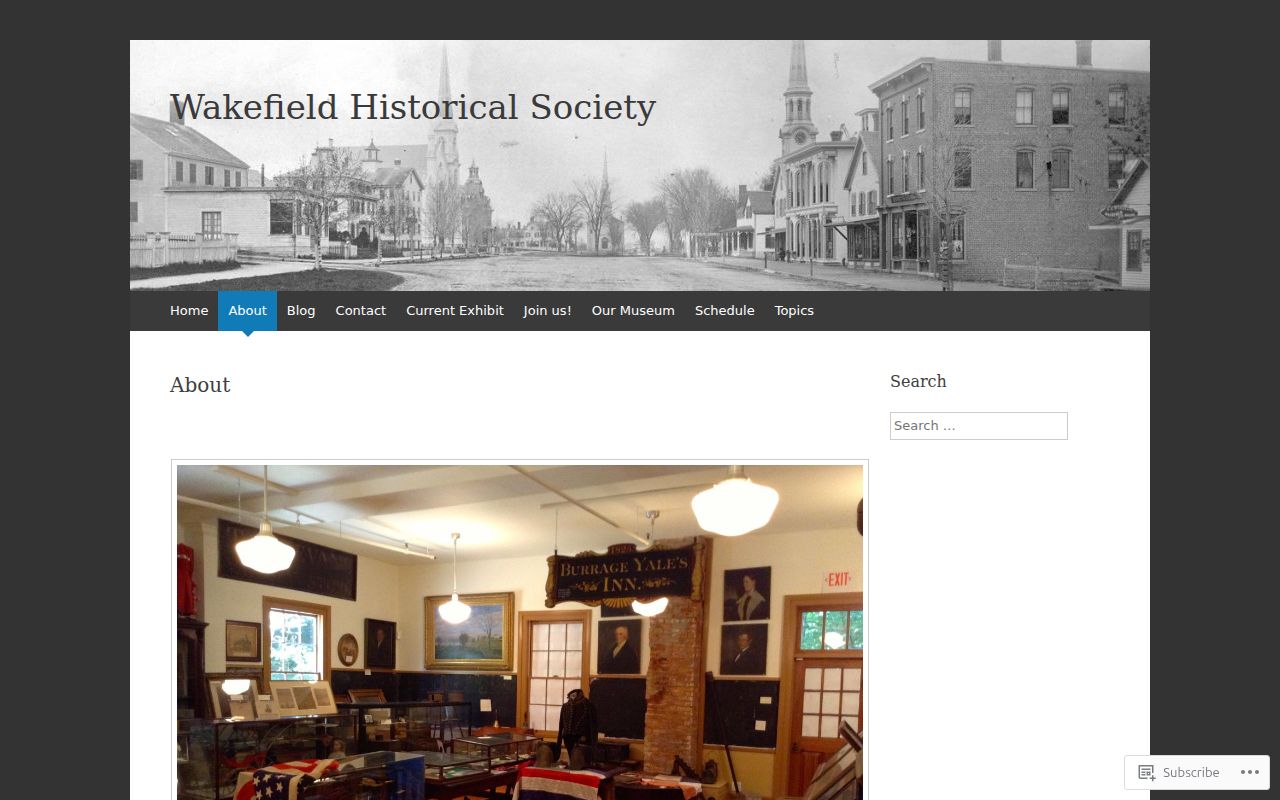
The Society image is useful as a reminder that a directory entry is one source in a larger local collection. A printed street line becomes stronger when its date, cross-street, map, and newspaper notice point in the same direction.
Wakefield City Directory Year Trace
The printed timeline is irregular, which makes it important to record the actual issue rather than write a guessed year range. The State Library guide lists early volumes, changing intervals, and later starred entries. The regional directory is a separate run, not a replacement for a Wakefield-only book. Its title pages and OCR can help locate a name, but the surrounding-town coverage should remain part of the citation.
| 1869 | First Wakefield year listed in the State Library holdings guide. |
|---|---|
| 1884 to 1922 | Several short interval runs appear in the guide, with gaps between some editions. |
| 1909 to 1941 | Regional Henry M. Meek and later Crosby Publishing coverage appears in scan metadata. |
| 1925 to 1997 | Selected later State Library entries carry unexplained asterisks and need availability verification. |
That uneven sequence is a useful comparison point. A city directory offers a dated snapshot, while a newspaper can bridge events between two issues. Neither source replaces the other, and neither is a complete count of every person in town.
Reading a Wakefield Printed Directory Entry
A scanned regional entry can contain far more than a surname. The inspected OCR includes forms such as a name followed by a street, a residence marker with a spouse or household reference, and a street followed by a corner description. Record what is printed before expanding it. Initials, punctuation, and the difference between an alphabetical list and a street section can matter when matching a household to another source.
| Indexed name | Surname and initials or given name as printed in the alphabetical list. |
|---|---|
| Residence notation | (Res.) identifies a residence reference in the inspected directory material. |
| Household clue | A spouse or other household notation may appear with the residence entry. |
| Street locator | Street, corner, or near reference can connect the entry to a map or street section. |
| Business context | Occupation, business, town-government, church, or society material may appear elsewhere in the volume. |
Directory abbreviations deserve their own note before a search moves on. They are part of the evidence, not decoration.
- Criss-cross directory
- A street-ordered portion of a directory used to approach an address and then its listed occupants.
- Householder index
- An alphabetical arrangement that leads from a name to the address printed for that household.
- Abbreviation key
- The volume’s own shorthand guide. In the inspected regional material,
nrmeans near,cormeans corner, and(Res.)means residence.
Wakefield's Regional Directory Volume
The Henry M. Meek directory, with later material credited to Crosby Publishing Co., covers Wakefield alongside Stoneham, Reading, North Reading, and Lynnfield. That regional form helps explain why a person, business, or institution might be listed outside a strictly Wakefield-only section. It also contains alphabetical inhabitant and business material plus street, town-government, church, and society sections. A publisher notice in the 1938 material says a door-to-door canvass was used to correct errors, yet the result should still be treated as a published snapshot rather than final proof.
The regional arrangement makes a useful comparison search when a name shifts across municipal lines. Preserve the volume title, page, and town section in the notes. A match found only through OCR needs the page image checked, because older type and abbreviations can be misread.
Wakefield Street Lists Since 1919
Wakefield street lists are a complementary resident source rather than a duplicate printed volume. The NOBLE collection begins in 1919, and hard copies are available in Beebe’s Local History Room. The annual list draws from returned municipal census forms and includes residents age 17 and older. It can help test whether a name and address appear in a particular local enumeration, but it is not the same record as a voter list and should not be treated as a complete household roster.
Use the street-list year beside the nearest directory issue. When both sources agree on spelling and address, they form a stronger dated lead. When they differ, retain both dates and ask Beebe staff whether there is another edition, a missing form, or a relevant town report.
Note: Availability of each individual street-list year should be confirmed with the library or the NOBLE collection record.
Wakefield Directory Gaps in Newspapers
Advantage Preservation’s Wakefield archive supplies a different kind of address and name trail. It reports 402,902 pages across local titles: the Wakefield Daily Item from 1894 to 2025, the Wakefield Citizen and Banner from 1874 to 1911, and The Wakefield Citizen from 1872 to 1873. Search a surname with a short date window, then try initials, former spellings, and a street or institution. OCR can convert a directory disappearance into a notice, business change, society item, or death lead.
The contrast matters. A city directory tends to compress a household into a line, while a newspaper can supply a dated event or community context. OCR is not perfect, so a weak search hit should be checked against the page image and paired with a directory date, not treated as a finished identification.
South Reading Before Wakefield
Historical place names change the search language. The Historical Society traces the locality through Redding, the 1812 separation, and the July 4, 1868 change from South Reading to Wakefield. A pre-1868 Wakefield city directory search can therefore miss the same place under its earlier name. Search South Reading and Redding, then use cross-streets, corner notes, maps, and legal descriptions to decide whether an address trail truly continues.
The Society’s industrial material adds a second local clue. Railroad, shoe, ice, rattan, and Heywood-Wakefield references may explain why an entry includes an occupation, factory, storefront, or society connection. Those references describe historical context, not present-day identity.
Trace a Wakefield Directory Household
Begin with the surname or street reference already known, then build a dated line of evidence. A household trace should capture the issue date, page, exact printed name, address string, occupation or business notation, spouse or household reference, and whether the entry came from the alphabetical or street section. Compare the next available issue, not an assumed annual edition. Pair the sequence with the appropriate federal census year, keeping in mind that the census is a single enumeration date and later schedules follow the 72-year public-release rule.
- Locate the name in the first available Wakefield city directory and transcribe the entry exactly.
- Check the street section for nearby listed names, corner terms, and address consistency.
- Move to the next documented directory or street-list year and record every change.
- Compare the dated directory trail with the matching public census period and a Sanborn sheet when the building itself matters.
- Use the Daily Item, Beebe death index, probate, cemetery material, or deeds to test a disappearance or move.
A name absent from a later volume is only a lead. It may reflect a move, a death, an unlisted household, a missed publication year, or a spelling shift. For a modern address-keyed trail, the Wakefield streets reference uses a different set of parcel and deed sources.